|
Ask Natural Life: Shedding Light on Light BulbsIncandescent? Halogen? CFL? LED?By Wendy Priesnitz
|
|
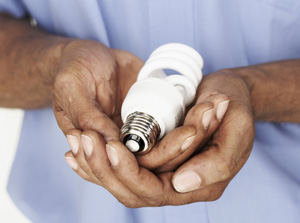
Q: I keep hearing that various places have banned or are going to ban traditional incandescent light bulbs. But I am aware of some problems with those compact fluorescent bulbs that seem to have been all the rage for a while now. And now, it seems they are also disappearing from the stores in favor of LEDs. Could you please sort through the confusion? A: Incandescent bulbs are actually small heaters that produce a little light on the side, wasting a lot of energy and creating a lot of pollution. According to the Rocky Mountain Institute, residential, commercial, industrial and municipal lighting uses 22 percent of all the electricity generated. So we’re not surprised that many governments are trying to switch consumers from incandescents to other lighting technologies. The primary alternative light bulb for a number of years was the compact fluorescent lamp also known as the compact fluorescent light (CFL). However, while they reportedly use approximately one quarter of the energy used by incandescent bulbs – they are far from the perfect alternative that some of the rhetoric might suggest. Going Out of StyleAs those ubiquitous, headache-inducing, glaring and buzzing tubes found in offices and stores went compact, they lost some of their annoying qualities. However, compact fluorescents that rival the warm light of traditional bulbs, that don’t buzz, and are hard to dim, were hard to find when people began to switch years ago, and are now increasingly absent from stores. There were large differences in terms of quality of light, cost, and turn-on time among different manufacturers, even for bulbs that appear identical. The quality of light can be poor, especially in the cheaper bulbs: Incandescent filaments can emit the full spectrum of light, but most fluorescent lamps, especially the inexpensive ones, don’t. There are also problems in that many CFLs don’t turn on instantly. They may appear dim initially, taking 30 seconds or more to reach full brightness. Others can flicker when they are first turned on. These issues have to do with the warming up of the ballast that then starts activating the light bulb. In addition, CFLs tend to be bulkier than other types of bulb, and many people found that they didn’t fit into certain light fixtures. But the major problem, in my opinion, is that all CFLs contain small amounts of mercury, which is classified as a hazardous substance. According to the American National Institutes of Health, exposures to very small amounts of mercury can result in devastating neurological and kidney damage, and even death. For fetuses, infants and children, the primary health effects of mercury are on neurological development. They have to be treated as household hazardous waste, rather than being entered into municipal waste or recycling systems. However, as the popularity of the bulbs increased, more of them were being thrown into the garbage, either through carelessness, lack of recycling options or lack of knowledge about the danger. They end up broken in landfills and emitting vaporous methyl mercury, which can get into the food chain more easily than the mercury removed during the recycling process. When I first wrote about CFLs in 2007, good quality bulbs carried the Energy Star logo on the packaging. But since then, Energy Star made it more difficult for CFLs to get their rating, and many retailers stopped selling them. General Electric stopped manufacturing them in 2016. However, the mercury problem remains because, given their long life, many homes are still using them. Alternatives To the AlternativeThere are alternatives to CFLs and incandescent bulbs. A tungsten-halogen lamp is an incandescent lamp with gases from the halogen family sealed inside. It has similar light output to a regular incandescent while using up to 40 percent less power. Although tungsten-halogen lamps are more expensive, they last two to four times longer than conventional incandescents. Unfortunately, they operate at very high temperatures and, in some instances, can pose a fire hazard. Halogen torchiere floor lamps are actually so dangerous they’re banned in some areas due to their tendency to tip and start fires. Parabolic aluminized reflector (PAR) lamps, typically used as spotlights or floodlights inside or outside homes, are also available with halogen technology. A standard 150-watt incandescent spotlight can be replaced with a lower wattage halogen lamp, reducing electricity consumption by up to 40 percent. LEDs – The Pros and ConsThe best alternative is the LED (light-emitting diode.) LEDs have been used in electronics, flashlights, headlamps for hiking, and Christmas decorations, for quite a few years. But their use as household lighting is more recent, possibly due to the high price initially. Back in 2007, I predicted that the cost would decrease rapidly as they became more popular, and that has happened, totally removing the barriers to their use. LED lights are reported to use 85 to 90 percent less energy than conventional bulbs. They are preferable to CFLs because they don’t contain mercury, and better than halogens because they burn cool and aren’t fragile. They last up to 10 times longer than CFLs – up to 60,000 hours, which averages out to 12 hours of light per day for 12 years. They are also highly directional, which means that they only put the light where you aim it, and can be attached to flexible strips and used in other innovative ways. They also turn on instantly flexible strips and used in other innovative ways. They also turn on instantly and don’t need to warm up. However, LEDs also have a pollution problem. (Are there any manufactured products that don’t?!) A study published in late 2010 in the journal Environmental Science and Technology found that they contain lead, arsenic, copper, and a dozen other potentially dangerous substances. Researcher Oladele Ogunseitan, chair of the University of California (UC)-Irvine’s Department of Population Health & Disease Prevention, and colleagues tested several types of LEDs, including those used as Christmas lights, traffic lights, car headlights, and brake lights. Low-intensity red LEDs were found to contain up to eight times the amount of lead, a known neurotoxin. White LEDs contain the least lead, but still harbor large amounts of nickel. The researchers recommended handling and disposing of a broken LED in the same way you would a broken CFL. Another issue has surfaced with LEDs as well. According to Dr. Alexander Wunsch, a world class expert on photobiology, LED lighting can be a serious source of electromagnetic field (EMF) radiation exposure. Among other ramifications, he cautions that it could lead to age-related macular degeneration, which is a leading cause of blindness in the elderly. LED bulbs emit primarily blue wavelengths and lack the should avoid using computer and mobile device screens at night due to the counterbalancing near-infrared frequencies; you may have heard that you blue light disrupting circadian rhythms. In Europe and other parts of the world, where LED use has been mandated by government, there has also been concern. For instance, the French Agency for Health and Safety of Food, Environment and Employment has expressed concern about the damage that could be caused to the eye due to direct exposure to fixtures emitting highly intense light. Presumably, shielded lighting fixtures could mitigate that danger. A study published by CELMA, the Federation of European Lighting Companies, compared the photo-biological safety of LED-based light sources to non-LED sources. It concluded that LED-based lighting sources are as safe to use as incandescent bulbs and fluorescent bulbs and that the amount of blue light emitted from them is no different than that emitted from non-LED light sources. However, that study was conducted by an industry organization that could have vested interests, and more research should be done. Nevertheless, I think careful use of LEDs is your best bet if you are interested in energy-efficiency. Otherwise, incandescent bulbs have not completely disappeared from the market in many places, and don’t seem to have the health or environmental effects of the current alternatives. This article was originally published in Natural Life Magazine in 2007, updated in 2011 and 2014, completely rewritten in 2018 and updated again in 2026. Wendy Priesnitz was the founding editor of Natural Life Magazine, Life Learning Magazine, Natural Child Magazine and Child's Play Magazine; is the owner of Life Media, which publishes all four of these now free online magazines; has been a journalist for over fifty years; written thirteen books; contributed to many other books; was the national leader of the Green Party of Canada in the 1990s and has two life learning adult daughters. |

|